

✨ What you can do
- Create new AI voice campaigns.
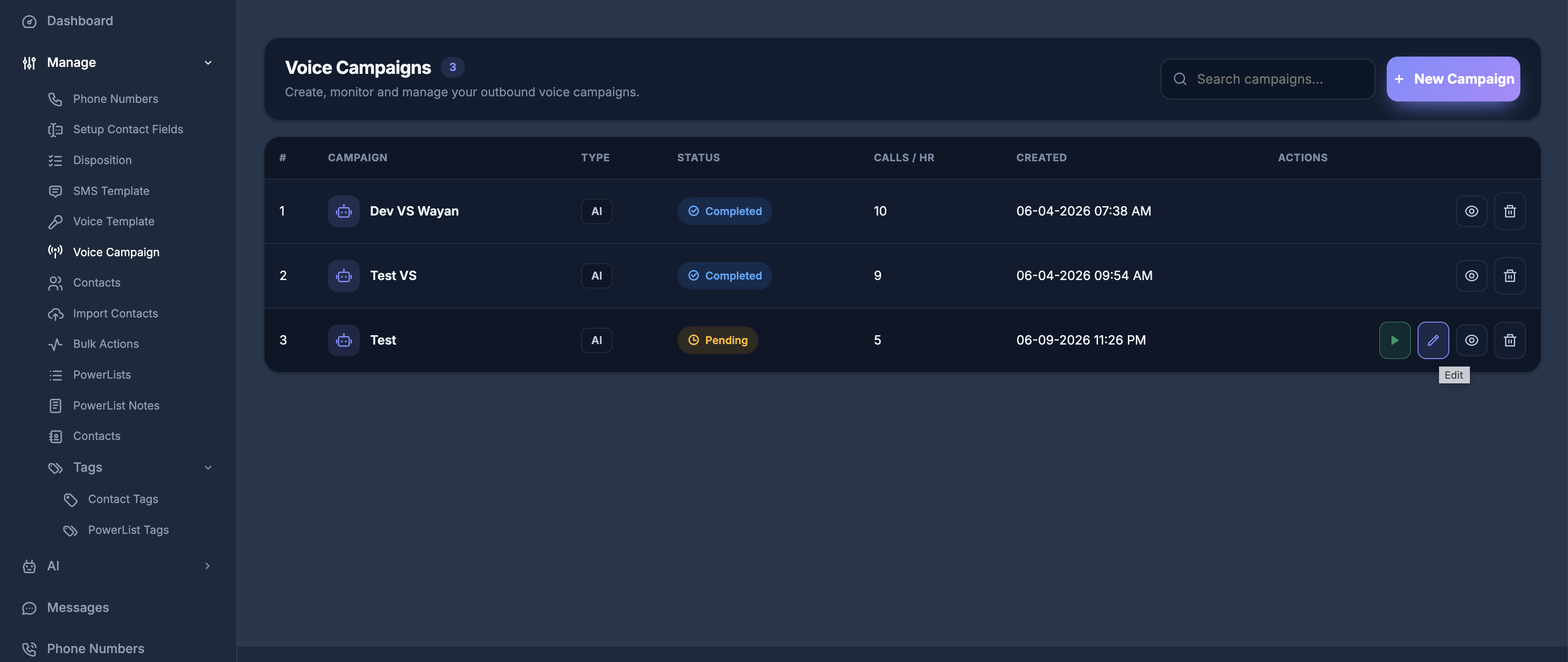
- View all existing campaigns in a searchable list.
- Edit campaigns that are not completed.
- Start Pending or Paused campaigns.
- Pause campaigns that are currently running.
- Open campaign reports to review performance.
- Delete campaigns when your account has permission.
📋 Campaign list
The main screen shows your campaigns in a table. Each row is one campaign. 🏁 Top actions- Search campaigns… — find campaigns by name, type, or status.
- + New Campaign — open the campaign builder to create a new campaign.
🗃️ Columns in the table
🚦 Campaign statuses
➕ Creating an AI campaign
Select + New Campaign from the campaign list to open the campaign builder.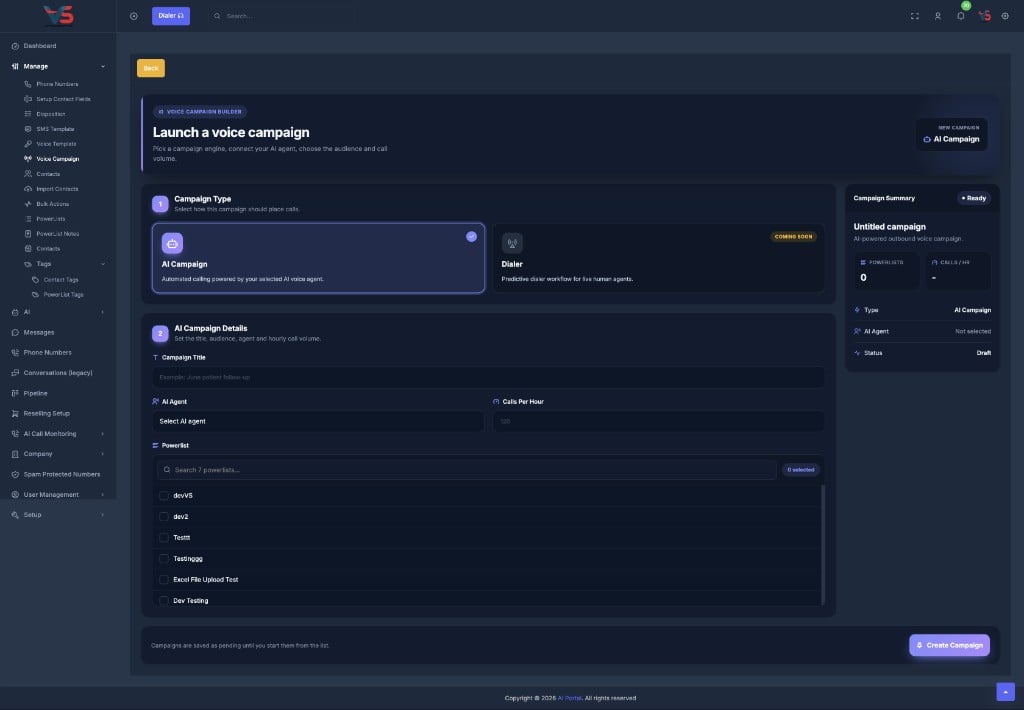
1️⃣ Step 1 — Campaign type
Choose the campaign engine:- AI Campaign — automated calling powered by your selected AI voice agent. This is the option available for new campaigns today.
- Dialer — predictive dialer workflow for live human agents. Shown as Coming Soon for new campaign creation.
2️⃣ Step 2 — AI campaign details
Fill in the required fields:
Select Create Campaign when you are ready. The campaign is saved as Pending and does not start automatically. Start it from the campaign list when you are ready to dial.
▶️ Starting a campaign
Campaigns with Pending or Paused status can be started from the campaign list.- Find the campaign in the list.
- Select Start.
- Confirm when prompted.
⏸️ Pausing a campaign
Campaigns with In Progress status can be paused from the campaign list.- Find the running campaign.
- Select Pause.
- Confirm when prompted.
✏️ Editing a campaign
Campaigns that are not completed can be edited if your account has permission. You can update:- Campaign title
- AI agent
- Calls per hour
- Selected powerlists
📊 Viewing reports
Open a report with the eye icon on a campaign row.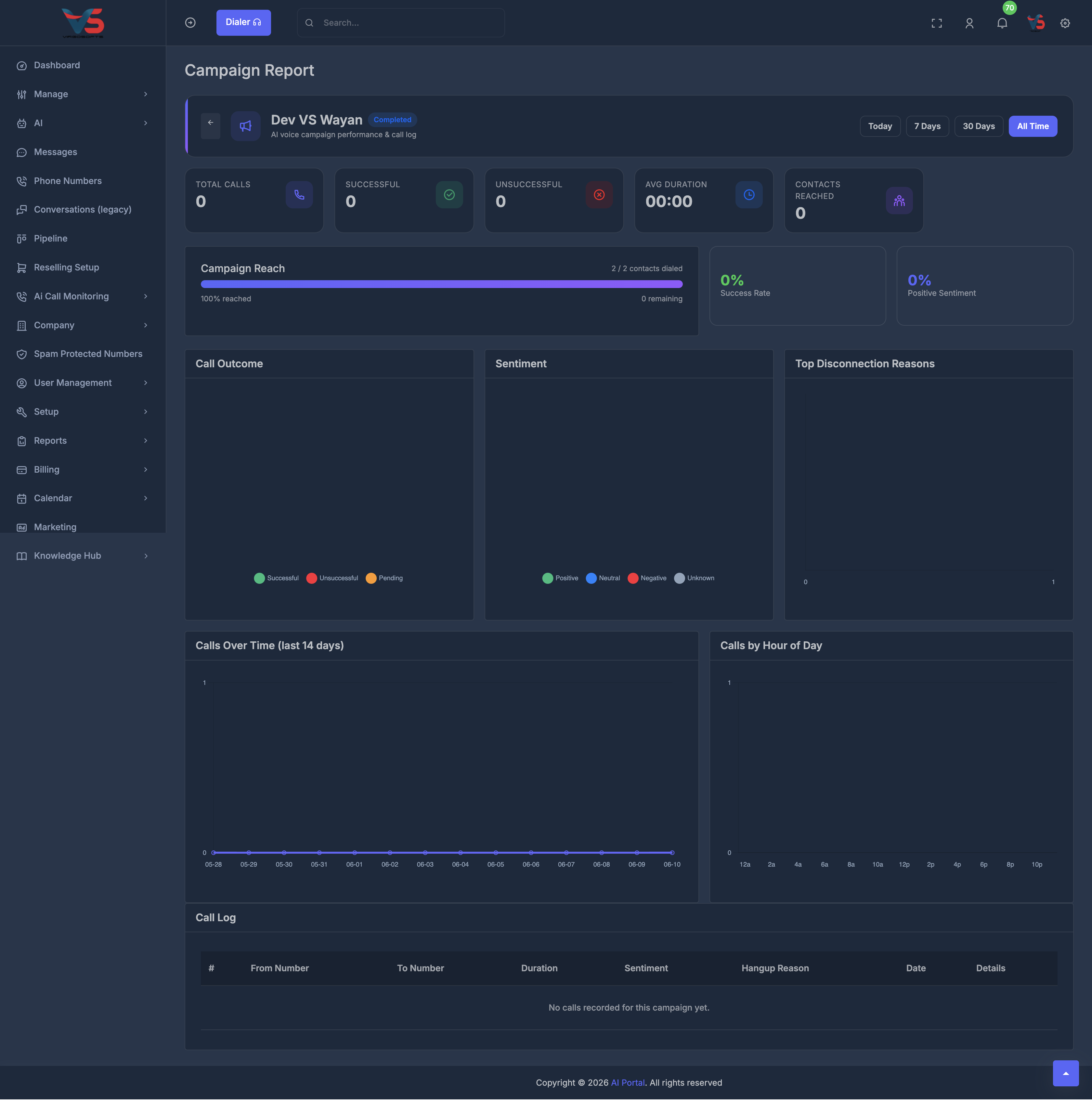
- Total calls made
- Successful and unsuccessful calls
- Contacts reached
- Average call duration
- Campaign reach across the selected audience
- Success rate and positive sentiment rate
- Call outcome
- Sentiment breakdown
- Top Disconnection Reasons
- Call over time (last 14 days)
- Call by hour of day
- Call log
🔎 Filters
Use filters at the top to narrow what appears in summary tiles and the call log:
📈 Summary cards
After filters are applied, quick counters typically show:
- Answered
- No Answer
- Busy
- Voicemail
- Dropped