

📝 Overview
Voice Templates lets you save reusable voice messages for calling workflows. You can create a template in three ways:- Text To Speech (type words, system reads them aloud).
- Audio File (upload an existing MP3/WAV file).
- Record Voice (record from your microphone in the browser).
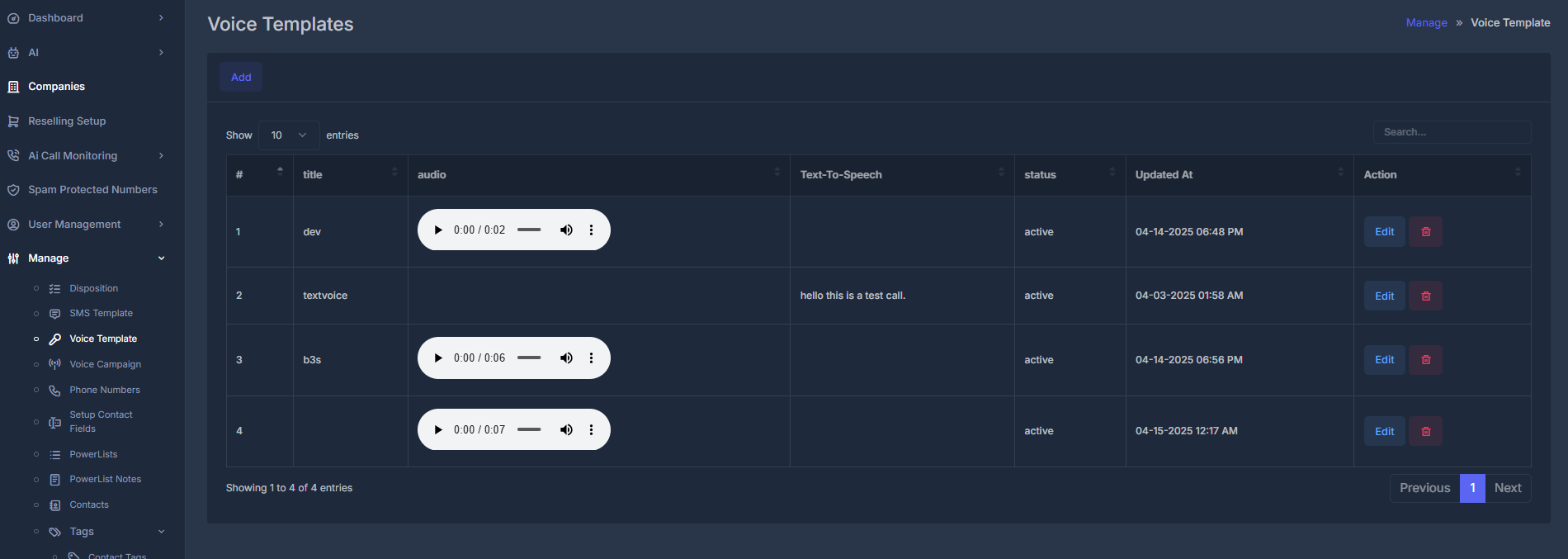
📄 Main list
When you open Voice Templates, you see a table with one row per template. ➕ Add Click Add to start a new template. The form opens and the list is hidden until you return. 🔍 Search A search field above the table filters rows as you type. Matching is based on table content.🗂️ Columns
If a template is file-based, TTS text may be empty. If it is TTS-based, audio may be empty in the list until generated/available by your setup.
✏️ Create or edit a template
- Click Add for a new template.
- Click Edit on an existing row to update it.
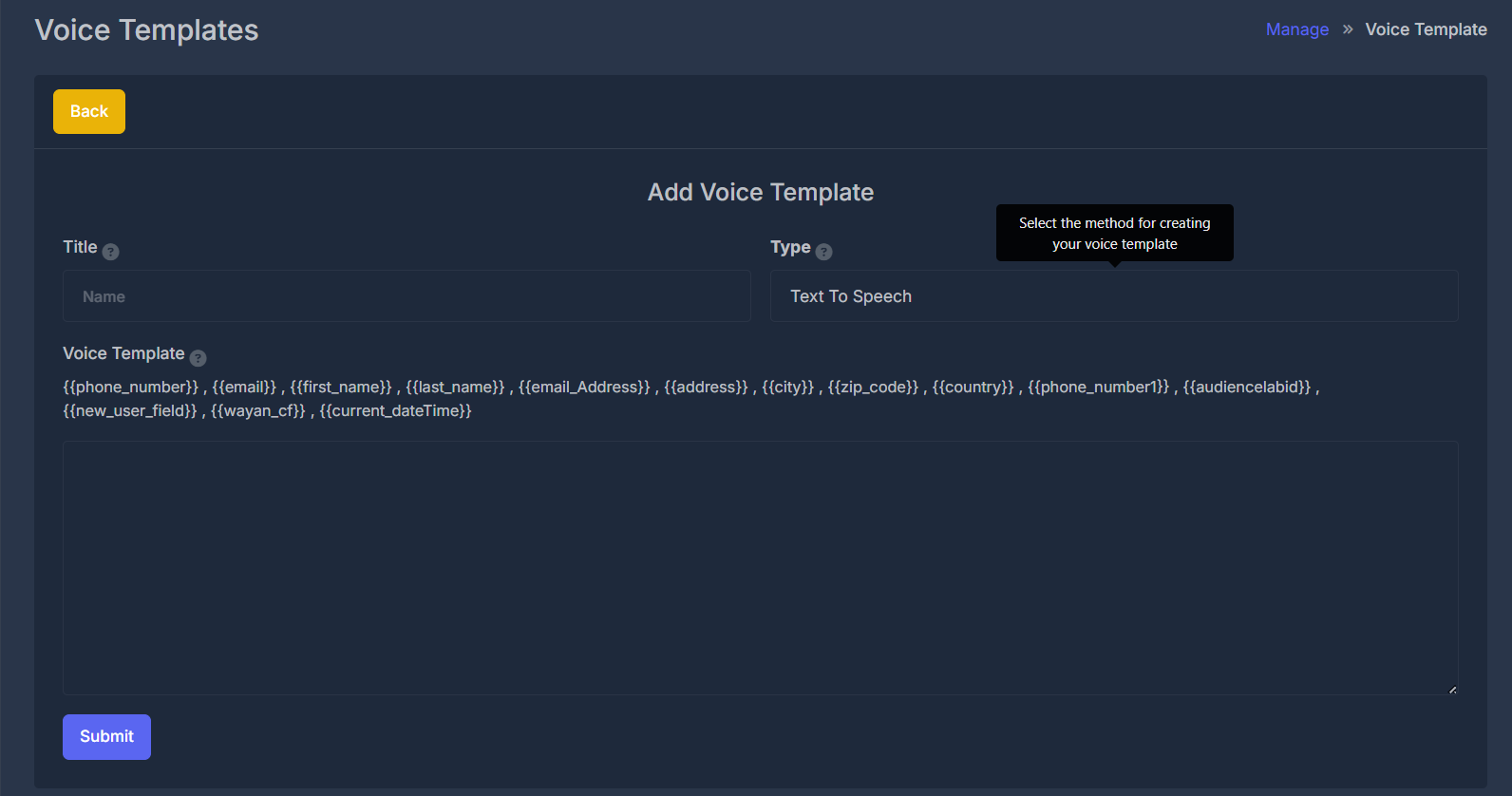
📝 Form fields
🏷️ Title Give the template a short, clear name (for example “Opening Greeting” or “Voicemail Follow-up”).- Helps your team identify the right template quickly.
- Should be filled for every template.
- Should be unique in your workspace (see rules section below).
🎚️ Type
Choose how this template is produced:- Text To Speech
- Audio File
- Record Voice
🗣️ Type: Text To Speech
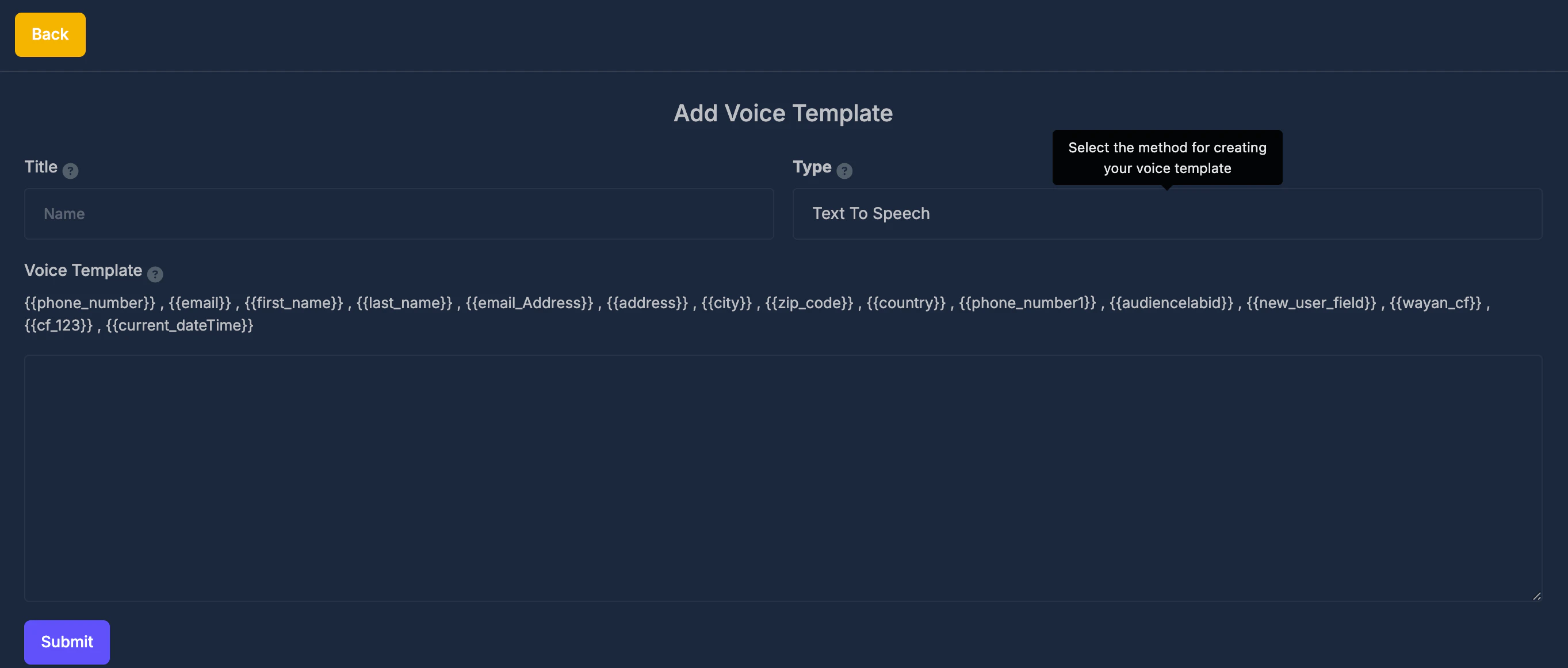
{{customer_name}}{{appointment_date}}{{appointment_time}}{{current_date}}
- While saving: a short wait message may appear.
- On success: confirmation appears, then list reloads.
- On failure: error appears on the form.
🎵 Type: Audio File
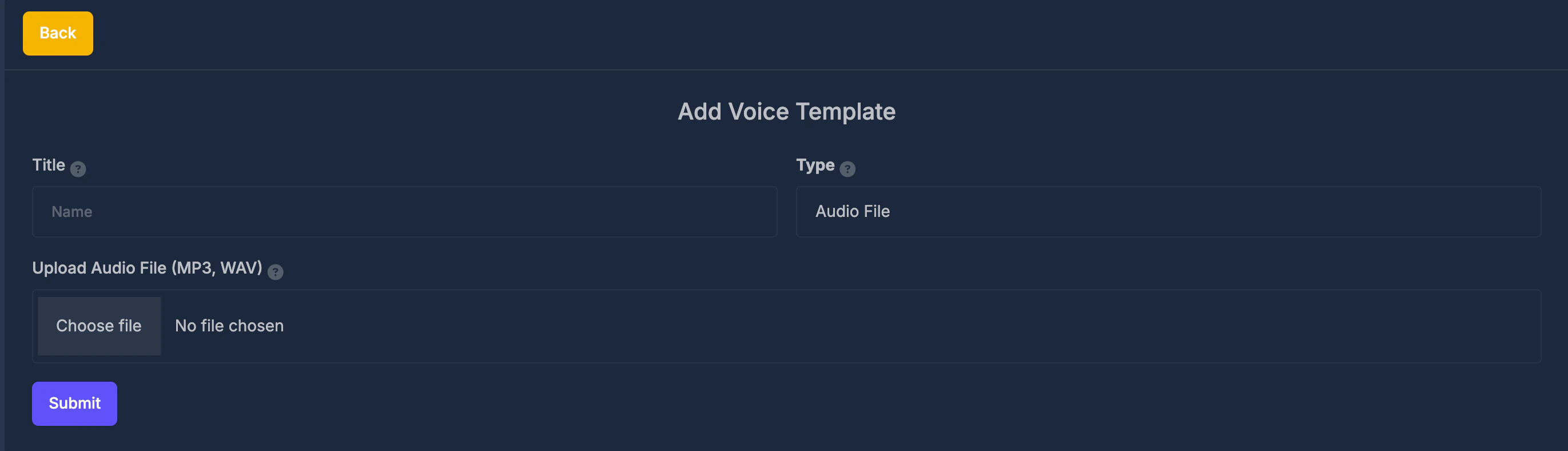
- Accepted formats: MP3 and WAV.
- Unsupported types are rejected with an error message.
🎙️ Type: Record Voice
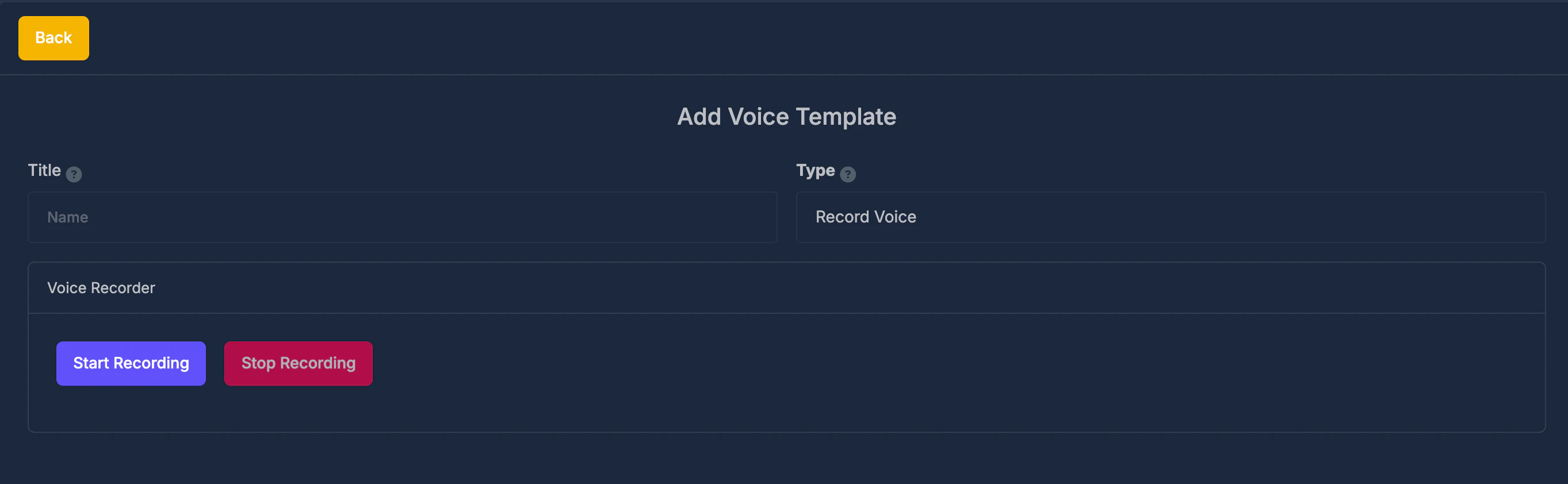
- Click Start Recording.
- Allow microphone permission when the browser asks.
- Click Stop Recording to end the take.
- Review preview playback.
- Choose one of:
- Upload Recording to save and return to the list.
- Discard & Record Again to clear and retake.
- Title required: Fill title before saving.
- Title uniqueness: Titles should be unique in your workspace. If duplicated, save fails and you must rename.
- Edit replacement: Uploading a new file while editing replaces the previous stored audio.
- Delete cleanup: Deleting a template removes the row and associated stored audio file.